



A website name can tell you very little about what is actually behind it. FSIBlog.com is a good example. Current web records show that the domain has existed for many years, but its identity and online presentation have changed over time. Some search results also associate the name with unrelated websites using “FSIBlog,” which makes checking the exact domain especially important. Before treating any site as an official source, readers should look at its current content, ownership signals, redirects, and overall browsing experience.
Read Also: Brent Bassett: Leading the Future with Technology
Quick Summary
- FSIBlog.com is an established domain with a registration history dating back to 2007.
- Current third-party technology data has reported the domain redirecting to another FSIBlog-branded website.
- Several unrelated websites use the FSIBlog name, including lifestyle and technology-focused sites.
- A domain’s age does not automatically prove that its current content or operator is trustworthy.
- Readers should verify the exact URL, ownership, privacy information, and redirects before using an unfamiliar website.
- Avoid entering sensitive information or downloading unknown files from websites you cannot independently verify.
What Is FSIBlog.com?
FSIBlog.com is a long-established domain that has appeared in third-party domain records for many years. RDAP information currently lists a February 9, 2007 registration date, with the domain using Cloudflare’s registrar services.
That history is useful, but it does not tell the complete story.
A domain can change ownership, purpose, design, content, and even its destination over its lifetime. In fact, technology information for FSIBlog.com has reported that the domain redirects to another FSIBlog-branded site.
This is why a website review should focus on its current state, rather than assuming that a domain’s historical presence guarantees continuity.
Why the FSIBlog Name Can Be Confusing
Search results reveal multiple websites using the FSIBlog name.
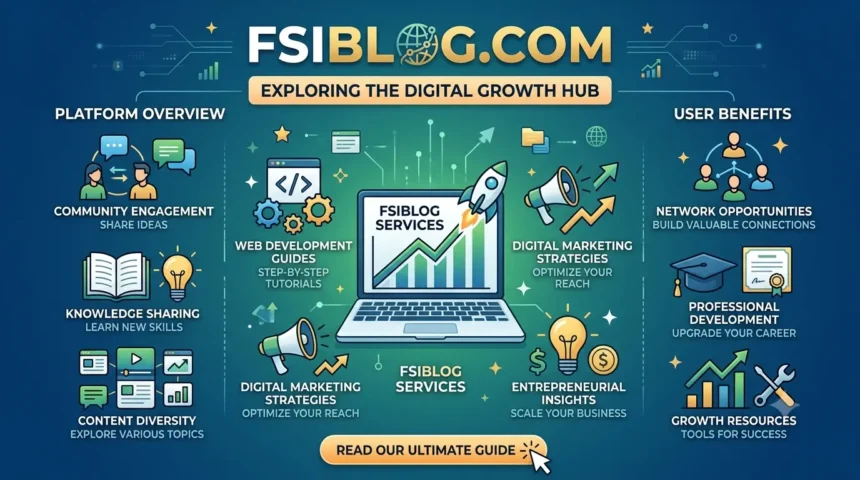
For example, one site describes FSIBlog as a coding resource offering programming solutions and tutorials, while another presents FSIBlog as a lifestyle publication covering topics such as fashion, motherhood, beauty, and personal growth.
There are also other domains using similar branding.
So if someone searches for “FSIBlog,” they should not assume that every result belongs to the same organization. The domain extension and exact spelling matter.
What Kind of Content Is Associated With FSIBlog?
The answer depends heavily on which FSIBlog domain a reader encounters.
One current FSIBlog-branded website, for example, presents itself as a lifestyle blog and describes content around everyday life, motherhood, fashion, beauty, family, and personal experiences.
Another FSIBlog project focuses on programming and technical problem solving. Its published material includes subjects involving Python, Django, Node.js, React, HTML, CSS, AJAX, and Go.
That difference is significant from an SEO and publishing perspective. A reader searching for “FSIBlog” may have an entirely different intent from someone searching for a particular FSIBlog subdomain or URL.
Content Categories Matter
Before evaluating a website, identify what it actually publishes.
A useful checklist includes:
- Main subject or niche
- Author information
- Publication dates
- Editorial policies
- Contact information
- Privacy policy
- Terms of use
- References or external sources where appropriate
These elements help establish context and make it easier to distinguish a genuine publication from a website that simply uses a familiar brand name.
Is FSIBlog.com Safe to Visit?
There is no responsible way to declare an entire domain “safe” based only on its age or name.
A domain registered in 2007 can still have a completely different website today. Likewise, a site using HTTPS can still contain questionable advertisements, redirects, or third-party content.
The sensible approach is to evaluate the specific page and behavior you encounter.
Check for Redirects
Redirects deserve particular attention with FSIBlog.com because third-party technology information has reported that the domain redirects elsewhere.
A redirect is not inherently dangerous. Many legitimate businesses redirect an old domain to a newer website.
The important question is where the visitor ends up.
If the destination suddenly changes to an unrelated domain, repeatedly opens new tabs, or asks for unusual permissions, it is better to leave the page.
Be Careful With Downloads
A normal article page generally should not require you to install unknown software simply to read its content.
Be cautious if a page asks you to download:
- Unknown executable files
- Unverified browser extensions
- APK files
- “Special” video players
- Security applications from unfamiliar sources
The same principle applies to suspicious browser notifications. If a site does not need notifications for the task you are performing, there is little reason to grant permission.
How Should You Evaluate an FSIBlog Website?
A few checks can provide a much clearer picture.
1. Verify the Exact Domain
Check every character in the address.
Look for:
- Unexpected hyphens
- Additional numbers
- Strange domain extensions
- Misspellings
- Unfamiliar redirects
A copied or look-alike domain may have no relationship with the original site.
2. Find the About and Contact Pages
A credible publication normally gives readers some information about who runs it.
For example, the lifestyle-focused FsiBlog identifies its founder and explains the site’s background on its About page.
That kind of transparency is useful because readers can understand who is responsible for published material.
3. Check the Privacy Policy
Privacy information should explain what data a website collects and why.
Look for details covering:
- Cookies
- Analytics
- Contact forms
- Advertising
- Personal information
- Third-party services
A privacy policy is not proof that a website is trustworthy, but its absence can make it harder to understand how your information is handled.
4. Look at the Content Quality
Ask a simple question: Does the content actually help the reader?
Useful signals include named authors, original explanations, meaningful examples, accurate information, and clear editorial standards.
For technical content, readers should also be able to test examples themselves. For lifestyle content, personal experience should be distinguished from professional or medical advice.
Why Domain History Matters for SEO
From an SEO perspective, domain history is interesting but frequently misunderstood.
A domain being old does not automatically give every new page strong rankings. Search engines evaluate many signals, including relevance, content quality, links, technical accessibility, and user-focused usefulness.
A domain that changes topics dramatically can also create confusion for users.
Imagine a website that historically discussed one subject and suddenly begins publishing articles about completely unrelated topics. A reader who arrives through an old search result may wonder whether they have reached the right site.
For publishers, consistency matters.
A clear niche, transparent editorial identity, useful content, and accurate metadata create a much stronger foundation than relying on an old domain name.
What Should Readers Do Before Trusting FSIBlog Content?
Treat the website like any other online information source.
If an article makes an important factual claim, check whether it provides supporting evidence. For technical instructions, test the method in a safe environment. For financial, legal, or medical subjects, consult authoritative sources rather than relying on a general blog alone.
This is particularly important because several different websites use the FSIBlog name. Searchers should confirm that the article they are reading actually belongs to the website they intended to visit.
Key Takeaways
- FSIBlog.com has a long domain history, with current RDAP records showing registration in 2007.
- The domain’s current destination and historical use should be considered separately.
- Third-party technology information has reported a redirect from FSIBlog.com to another FSIBlog-branded site.
- Multiple unrelated websites currently use the FSIBlog name.
- Always check the exact URL before assuming two websites are connected.
- Look for identifiable ownership, contact details, privacy information, and editorial transparency.
- Avoid suspicious downloads and unnecessary permissions.
- Use independent authoritative sources when information could affect important decisions.
Frequently Asked Questions
What is FSIBlog.com?
FSIBlog.com is a long-registered web domain associated with the FSIBlog name. Current web information indicates that its destination has changed over time, so users should check the exact URL and current website before relying on historical descriptions.
When was FSIBlog.com registered?
Current RDAP information lists February 9, 2007 as the registration date for fsiblog.com. The domain has therefore existed for many years, although domain age alone does not establish the quality or ownership of its current website.
Is FSIBlog.com the same as every FSIBlog website?
No. Several separate websites use the FSIBlog name, including sites focused on lifestyle content and programming resources. Always compare the complete domain and site information before assuming that different FSIBlog websites are connected.
Should I trust information published on FSIBlog?
Evaluate individual articles rather than trusting the brand name alone. Check the author, publication date, supporting evidence, editorial information, and whether authoritative sources confirm important claims.
Conclusion
FSIBlog.com has a surprisingly long web history, but the current internet landscape around the FSIBlog name is more complicated than a single website. Multiple domains use similar branding, while historical domain information shows that fsiblog.com itself has changed or redirected over time. For readers and publishers, the practical lesson is simple: verify the exact domain, understand who operates the site, and judge content on its evidence and usefulness rather than the name alone.